Cisco - Big Savings Alert – Don’t Miss This Deal - Ends In 1d 00h 00m 00s Coupon code: 26Y30OFF
  1. Home
  2. Cisco
  3. 300-415 Exam
  4. Free 300-415 Questions

Free Practice Questions for Cisco 300-415 Exam

Pass4Future also provide interactive practice exam software for preparing Cisco Implementing Cisco SD-WAN Solutions (300-415) Exam effectively. You are welcome to explore sample free Cisco 300-415 Exam questions below and also try Cisco 300-415 Exam practice test software.

Page:    1 / 14   
Total 430 questions

Question 1

How do WAN Edge devices operate when vSmart is inaccessible or fails to be reached by the WAN Edge?


Answer : D


Question 2

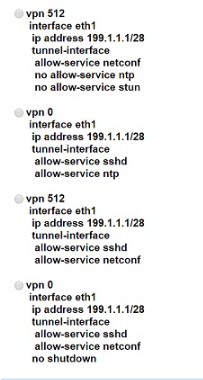
An engineer must apply the configuration for certificate installation to vBond Orchestrator and vSmart Controller. Which configuration accomplishes this task?


Answer : D


Question 3

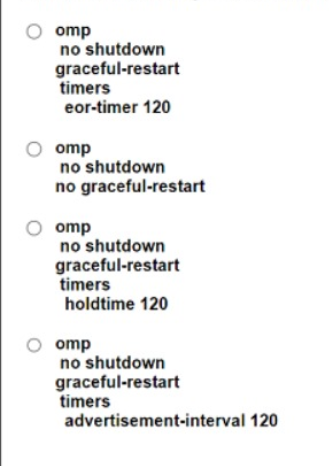
A company deploys a Cisco SD-WAN solution but has an unstable Internet connection. When the link to vSmart comes back up, the WAN Edge router routing table is not refreshed, and some traffic to the destination network is dropped. The headquarters is the hub site, and it continuously adds new sites to the SD-WAN network. An engineer must configure route refresh between WAN Edge and vSmart within 2 minutes. Which configuration meets this requirement?


Answer : A, A


Question 4

Which controller is excluded from the process of checking against the authorized, allowed list?


Answer : A


Question 5

What is a key element used in a vBond Orchestrator redundancy topology?


Answer : A

In Cisco SD-WAN architecture, the vBond Orchestrator plays a crucial role in the initial device onboarding and control plane security. Ensuring redundancy for vBond Orchestrators is essential for maintaining high availability and reliability in the SD-WAN network.

1.Fully Qualified Domain Name (FQDN): The use of an FQDN is a key element in vBond Orchestrator redundancy. By configuring multiple vBond Orchestrators with the same FQDN, the SD-WAN devices can resolve this domain name to different IP addresses corresponding to the different vBond Orchestrator instances. This allows for automatic failover and load balancing among the vBond Orchestrators.

1.Redundancy Mechanism: The DNS mechanism will resolve the FQDN to a list of IP addresses, and in case one vBond is unreachable, another can be contacted. This approach ensures continuous availability and redundancy without requiring manual reconfiguration of the devices.

1.Reference:

oCisco SD-WAN Design Guide

oCisco SD-WAN Configuration and Deployment Guide


Page:    1 / 14   
Total 430 questions