These GED Mathematical Reasoning sample questions are a small glimpse of our full set of GED Mathematical Reasoning actual questions. They give you a preview of what the real GED Mathematical Reasoning exam might look like and the contents of Pass4Future's premium GED Mathematical Reasoning product. You must not underestimate the value of GED Mathematical Reasoning practice exam questions, as they allow you to understand the actual GED Mathematical Reasoning Exam in greater depth. Using them will save your time and money otherwise wasted in GED Mathematical Reasoning Exam reattempts. Study guides and tutorials provide you with theoretical details about the GED Mathematical Reasoning exam; these GED Mathematical Reasoning practice exam questions prepare you to pass the exam. Get Pass4Future's premium access to continue your GED Mathematical Reasoning exam practice with the complete set of GED Mathematical Reasoning realistic questions. Our GED Mathematical Reasoning practice questions come in various formats; make sure to check out the details and free demo of each format.
Do you know that you can access more real GED-Mathematical-Reasoning exam questions via Premium Access? ()
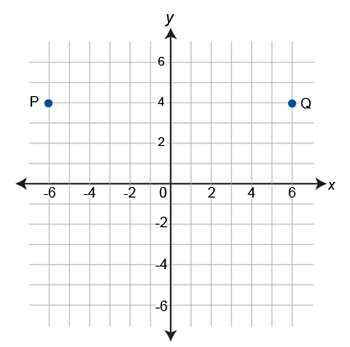
A point and its reflection in a line are mirror images of one another, the ''mirror'' being the line itself. In the diagram below, points P and Q are reflections of one another in the y-axis.

Point R (not shown) is the reflection of point P in the x-axis. Point S is the reflection of point R in the y-axis.
What is the location of point S?
Answer : A
Exhibit.

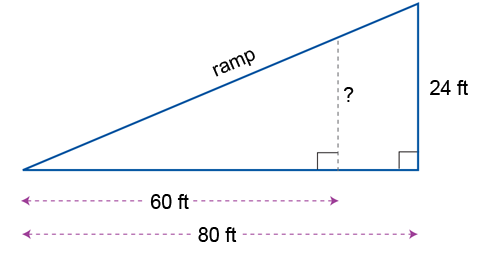
The diagram below shows a ramp that rises uniformly 24 feet over a distance of 80 feet.
How many feet high will the ramp be at a point 60 feet from its beginning?
Answer : B
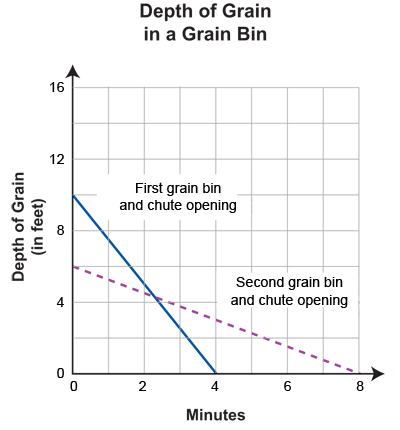
A second grain bin is identical in shape to the first, but the size of the opening for the chute is different. The depth of grain in both bins is shown in the graph below.

How do the initial depth of the grain and the size of the chute opening of the second bin compare to those of the first bin?
Answer : E
A blueprint of a building uses a scale where 1 centimeter represents 15 meters. If the actual distance between two points on the building is 210 meters, how long, in centimeters, must a line segment be to represent that distance on the blueprint?
Answer : A
If a, b, and c are three different numbers, and a minus b equals c, which of the following statements must be true?
Answer : C