Free IIBA Certification in Business Data Analytics (CBDA) Practice Questions
These IIBA CBDA sample questions are a small glimpse of our full set of IIBA CBDA actual questions. They give you a preview of what the real CBDA exam might look like and the contents of Pass4Future's premium IIBA CBDA product. You must not underestimate the value of IIBA CBDA practice exam questions, as they allow you to understand the actual Certification in Business Data Analytics exam in greater depth. Using them will save your time and money otherwise wasted in Certification in Business Data Analytics exam reattempts. Study guides and tutorials provide you with theoretical details about the CBDA exam; these CBDA practice exam questions prepare you to pass the exam. Get Pass4Future's premium access to continue your CBDA exam practice with the complete set of IIBA CBDA realistic questions. Our IIBA CBDA practice questions come in various formats; make sure to check out the details and free demo of each format.
IIBA CBDA Sample Exam Questions
Page: 1
/ 14 Total 152 questions
Do you know that you can access more real IIBA CBDA exam questions via Premium Access? ()
Question 1
What type of data model describes the highest level of relationship between entities and represents how a business perceives its information?
Answer : A
Question 2
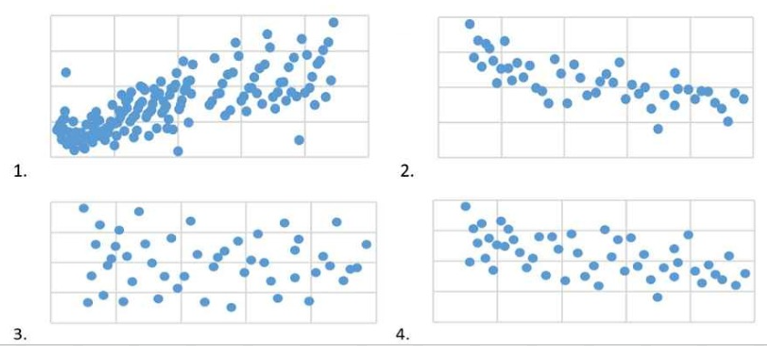
DIAGRAM TAKEN
Answer : C
Question 3
As the organization looks to advance its analytics practices, the topic of provisioning access to executive dashboards and visualizations is under discussion. Establishing standards and implementing role based logins to executive dashboards will address:
Answer : B
Question 4
An analytics team completed their research to determine why customers are abandoning items in their online shopping cart. The team suggests improvements to the website to address the problem. The Director of Sales proclaims that the current website is fine and indicates that the problem materialized when the company increased its shipping rates. The solution proposed by the team seems misaligned. What has gone wrong?
Answer : C
Agreeing on the business problem is the first and most critical step in any analytics project, as it defines the scope, purpose, and objectives of the analysis, and aligns the expectations and interests of the stakeholders1.Agreeing on the business problem involves identifying the problem statement, the problem owner, the problem context, the problem impact, and the problem criteria2. If the team did not agree on the business problem, the solution proposed by the team may seem misaligned with the actual needs, preferences, or assumptions of the decision makers, and may not address the root cause or the main drivers of the problem. In this scenario, the team and the Director of Sales may have different views on what the business problem is, why it is important, and how it should be solved.
The other options are not correct explanations of what has gone wrong. This scenario can be addressed with analytics, as it involves using data to understand customer behavior, identify factors influencing cart abandonment, and recommend improvements to the website or the pricing strategy. The team may or may not have agreed on the root cause of the problem, but that is not the main issue, as the root cause analysis is a part of the data analysis step, not the problem definition step.The team may or may not have performed an insufficient amount of planning, but that is not the main issue, as the planning process is a subsequent step after the problem definition step, and it depends on the clarity and agreement of the business problem.
Question 5
Freedom Insurance is planning to offer a new type of insurance policy and would like to determine how to optimally price it. The company seeks to identify the characteristics of this policy that would produce the maximum profit in the coming year. What type of analytics would Freedom Insurance be considering to achieve this objective?