Microsoft - Big Savings Alert – Don’t Miss This Deal - Ends In 1d 00h 00m 00s Coupon code: 26Y30OFF
  1. Home
  2. Microsoft
  3. DP-700 Exam
  4. Free DP-700 Questions

Free Practice Questions for Microsoft DP-700 Exam

Pass4Future also provide interactive practice exam software for preparing Microsoft Implementing Data Engineering Solutions Using Microsoft Fabric (DP-700) Exam effectively. You are welcome to explore sample free Microsoft DP-700 Exam questions below and also try Microsoft DP-700 Exam practice test software.

Page:    1 / 14   
Total 106 questions

Question 1

Note: This question is part of a series of questions that present the same scenario. Each question in the series contains a unique solution that might meet the stated goals. Some question sets might have more than one correct solution, while others might not have a correct solution.

After you answer a question in this section, you will NOT be able to return to it. As a result, these questions will not appear in the review screen.

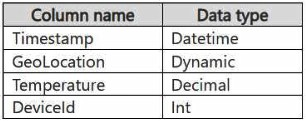
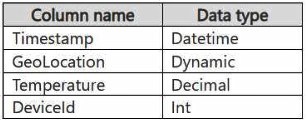
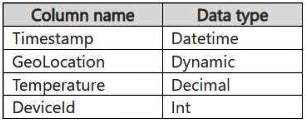
You have a KQL database that contains two tables named Stream and Reference. Stream contains streaming data in the following format.
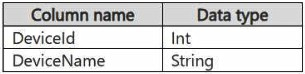
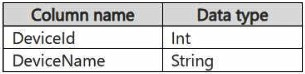
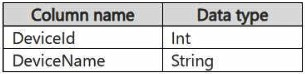
Reference contains reference data in the following format.
Both tables contain millions of rows.

You have the following KQL queryset.

You need to reduce how long it takes to run the KQL queryset.

Solution: You change the join type to kind=outer.

Does this meet the goal?


Answer : B

An outer join will include unmatched rows from both tables, increasing the dataset size and processing time. It does not improve query performance.


Question 2

Note: This question is part of a series of questions that present the same scenario. Each question in the series contains a unique solution that might meet the stated goals. Some question sets might have more than one correct solution, while others might not have a correct solution.

After you answer a question in this section, you will NOT be able to return to it. As a result, these questions will not appear in the review screen.

You have a KQL database that contains two tables named Stream and Reference. Stream contains streaming data in the following format.

Reference contains reference data in the following format.

Both tables contain millions of rows.

You have the following KQL queryset.

You need to reduce how long it takes to run the KQL queryset.

Solution: You change project to extend.

Does this meet the goal?


Answer : B

Using extend retains all columns in the table, potentially increasing the size of the output unnecessarily. project is more efficient because it selects only the required columns.


Question 3

Note: This question is part of a series of questions that present the same scenario. Each question in the series contains a unique solution that might meet the stated goals. Some question sets might have more than one correct solution, while others might not have a correct solution.

After you answer a question in this section, you will NOT be able to return to it. As a result, these questions will not appear in the review screen.

You have a KQL database that contains two tables named Stream and Reference. Stream contains streaming data in the following format.

Reference contains reference data in the following format.

Both tables contain millions of rows.

You have the following KQL queryset.

You need to reduce how long it takes to run the KQL queryset.

Solution: You move the filter to line 02.

Does this meet the goal?


Answer : A

Moving the filter to line 02: Filtering the Stream table before performing the join operation reduces the number of rows that need to be processed during the join. This is an effective optimization technique for queries involving large datasets.


Question 4

Note: This question is part of a series of questions that present the same scenario. Each question in the series contains a unique solution that might meet the stated goals. Some question sets might have more than one correct solution, while others might not have a correct solution.

After you answer a question in this section, you will NOT be able to return to it. As a result, these questions will not appear in the review screen.

You have a KQL database that contains two tables named Stream and Reference. Stream contains streaming data in the following format.

Reference contains reference data in the following format.

Both tables contain millions of rows.

You have the following KQL queryset.

You need to reduce how long it takes to run the KQL queryset.

Solution: You add the make_list() function to the output columns.

Does this meet the goal?


Answer : B

Adding an aggregation like make_list() would require additional processing and memory, which could make the query slower.


Question 5

You have a Fabric workspace that contains a lakehouse named Lakehouse1. Lakehouse1 contains a Delta table named Table1.

You analyze Table1 and discover that Table1 contains 2,000 Parquet files of 1MB each.

You need to minimize how long it takes to query Table1.

What should you do?


Answer : C

Problem Overview:

Solution:

Commands and Their Roles:

- Compacts small Parquet files into larger files to improve query performance.

- It supports optional features like V-Order, which organizes data for efficient scanning.

- Removes old, unreferenced data files and metadata from the Delta table.

- Running VACUUM after OPTIMIZE ensures unnecessary files are cleaned up, reducing storage overhead and improving performance.


Page:    1 / 14   
Total 106 questions